What Is a Creator Collaboration Proposal? 8 Key Elements
Learn how to write a creator collaboration proposal with audience insights, campaign ideas, deliverables, pricing and a ready-to-use template.
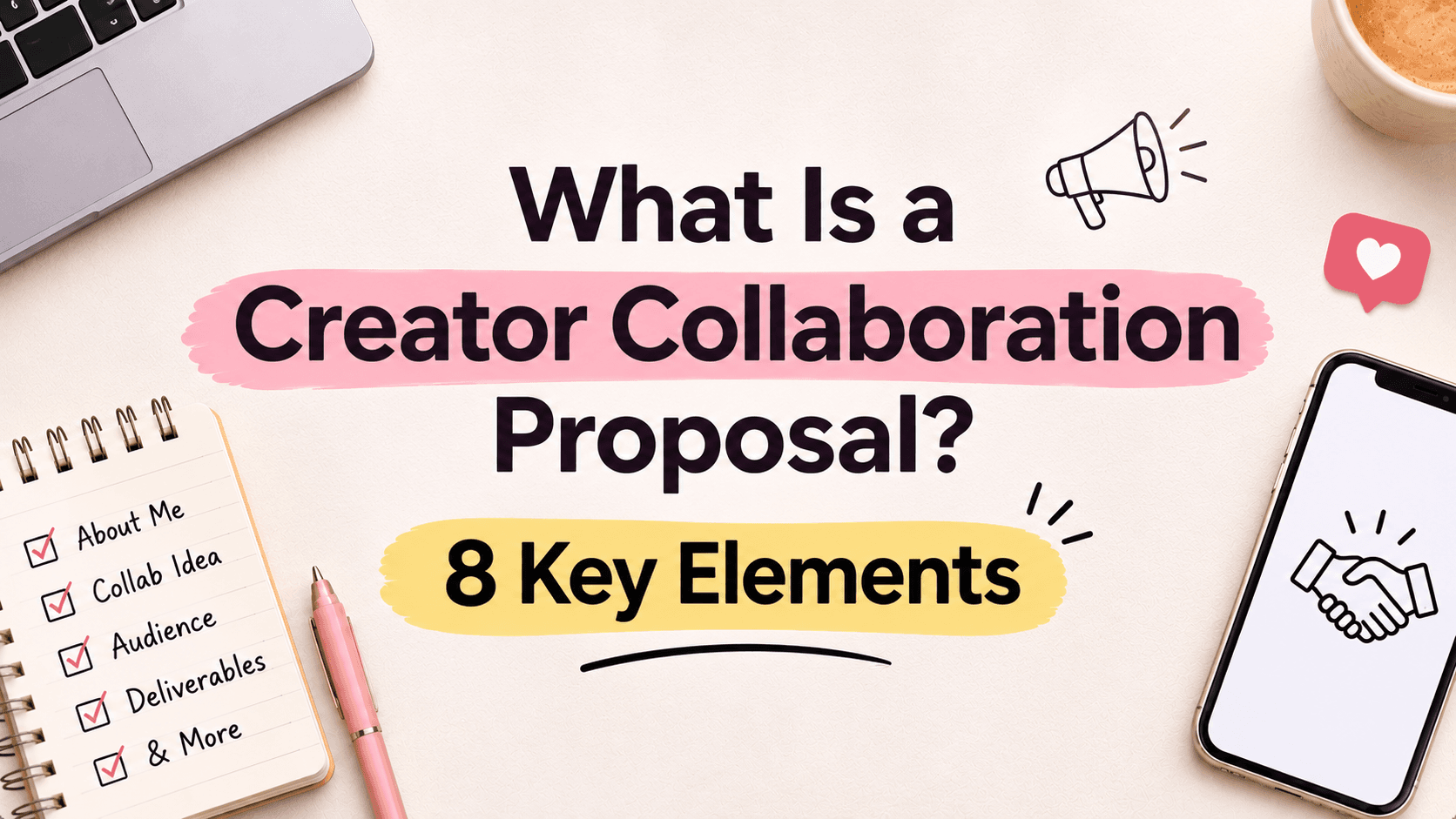
What Should a Creator Collaboration Proposal Include? 8 Essential Elements
Found a brand you'd love to work with? Having a great content idea is a good start, but how do you convince the brand that you're the right creator for its campaign?
That's where a collaboration proposal comes in.
A creator collaboration proposal introduces your content, explains what you can offer and shows a brand how a potential partnership could work. Instead of simply asking for a collaboration, it gives the brand a clear reason to consider working with you.
Whether you're approaching a brand for the first time or responding to a campaign opportunity, here's what your proposal should include.
1. A Short Introduction About Yourself
Start by introducing yourself and explaining what kind of content you create.
You don't need a lengthy personal story. Keep it short and help the brand understand your creator identity.
Include:
- Your name and creator handle.
- Your content niche.
- The platforms you actively create on.
- The type of content you specialise in.
For example:
"I'm [Name], a fashion and lifestyle creator who shares outfit inspiration, styling tips and everyday fashion finds on Instagram. I create relatable content that helps my audience discover new styles and products."
Your introduction should help the brand understand who you are and what makes your content relevant.
2. Why You Want to Collaborate With the Brand
A proposal shouldn't feel like a message sent to 20 different brands.
Show that you've explored the brand and understand its products, audience or current campaigns.
Mention:
- What you like about the brand or its products.
- Why it fits your content niche.
- How your audience might relate to its offerings.
- What made you interested in collaborating.
For example, a food creator approaching a healthy snack brand could explain how the product fits naturally into their recipe videos, snack recommendations or everyday food content.
Pro tip: Before sending your proposal, review the brand's previous creator collaborations. This can help you understand its preferred content style, campaign formats and potential expectations.
This makes your proposal feel intentional rather than generic.
3. Your Audience Insights and Social Media Statistics
Brands want to understand who they could reach through your content.
Include relevant audience information that helps them evaluate whether your profile matches their campaign.
Some useful metrics are:
- Follower count: Your current audience size on each platform.
- Audience demographics: Age groups, locations and other relevant audience insights.
- Reach: The number of unique accounts your content reaches.
- Engagement: Interactions such as likes, comments, saves and shares.
- Average views: How your videos or Reels generally perform.
Brands don't always prioritise creators with the highest follower counts. A creator with a smaller but highly relevant audience can be a better fit for a campaign than someone with a much larger but unrelated following.
Use recent and accurate figures from your platform analytics. You don't need to include every available metric. Choose the information that best supports your proposal.
For example, if you're pitching a local restaurant, your audience's location may be more relevant than your overall follower count.
4. Your Collaboration Idea
This is one of the most important parts of your proposal.
Don't just tell the brand that you'd love to collaborate. Explain what you have in mind and how you would feature its product or service.
For example:
- A beauty creator could propose a skincare routine featuring the brand's products.
- A fashion creator could suggest a styling Reel featuring a new collection.
- A food creator could pitch a recipe video using the brand's ingredients.
- A travel creator could suggest a destination experience or hotel feature.
You can also include a short creative concept explaining the content's theme, presentation and intended audience.
The idea doesn't have to be a fully developed script. It should simply give the brand a clear picture of what the collaboration could look like.
5. Proposed Deliverables and Content Formats
Once you've introduced your idea, explain what you can create for the brand.
Be specific about the content formats and approximate deliverables you're proposing.
For example:
- 1 Instagram Reel featuring the product.
- 2 Instagram Stories with product details.
- 1 product demonstration video.
- 1 carousel post highlighting product features.
Mention the platform where each piece of content will be published.
Avoid promising more content than you can realistically deliver. Your proposal should reflect what you can create within the agreed timeline and budget.
6. Your Portfolio and Previous Work
Brands may want to see examples of your content before deciding whether to collaborate.
Include links to your strongest and most relevant work.
You can share:
- Previous brand collaborations.
- Product reviews and demonstrations.
- Reels or videos that match the proposed campaign.
- Self-created sample content.
- Your creator portfolio or media kit.
If you haven't worked with a brand before, don't worry. You can still showcase sample content that demonstrates your filming, editing, storytelling and presentation skills.
Choose examples that are relevant to the brand you're approaching rather than sharing every post you've created.
7. Your Proposed Budget and Commercial Terms
If you're approaching a brand for a paid collaboration, include your expected compensation or proposed budget.
Your pricing should consider more than just the number of posts you're creating.
Think about:
- The number and type of deliverables.
- The time required for content creation.
- Shooting and editing requirements.
- Revisions and approval rounds.
- Content usage rights.
- Exclusivity requirements.
You can mention a proposed fee or share your rate card for the brand to review.
If you're unsure about the campaign budget, you can invite the brand to share its requirements and budget before finalising the commercial terms.
Also clarify whether your proposed fee covers only content creation and posting or includes additional usage rights.
8. Your Proposed Timeline and Contact Details
Give the brand an idea of how the collaboration could progress.
You can include an estimated timeline for:
- Campaign confirmation.
- Product delivery, if applicable.
- Content creation.
- Draft submission and feedback.
- Final publishing.
Keep the timeline realistic and leave room for revisions or delays.
Finally, add your professional email address and social media handles so the brand knows how to reach you.
End with a simple invitation to discuss the proposal further.
A Simple Creator Collaboration Proposal Template
Not sure how to put everything together? Here's a basic structure you can customise when approaching a brand.
Subject: Collaboration Proposal – [Your Name / Creator Handle]
Hi [Brand Name],
I'm [Your Name], a [your niche] content creator who shares [brief description of your content] on [platform name].
I've been exploring your brand and really like [mention a product, campaign or something specific about the brand]. I believe your brand would be a great fit for my content and audience.
I'd love to explore a potential collaboration featuring [product/service or campaign idea].
A little about my profile:
- Platform: [Instagram/YouTube/Other]
- Handle: [Your Handle]
- Followers: [Follower Count]
- Average Reach/Views: [Relevant Metric]
- Audience: [Brief Audience Details]
My proposed collaboration:
- Content format: [Reel/Story/Video/Carousel]
- Deliverables: [Number and type of posts]
- Creative concept: [Brief description]
- Proposed timeline: [Timeline]
- Expected budget: [Your Fee, if applicable]
I've also attached my portfolio/media kit for your reference.
I'd love to discuss this further and explore how we could work together.
Looking forward to hearing from you!
Best,
[Your Name]
[Contact Details]
Common Mistakes to Avoid in a Collaboration Proposal
Even a good collaboration idea can get overlooked if the proposal isn't clear or relevant.
Watch out for these mistakes:
- Sending generic proposals: Personalise your proposal for each brand.
- Making it too lengthy: Keep the information relevant and easy to scan.
- Focusing only on follower count: Show audience relevance, content quality and performance.
- Suggesting vague deliverables: Clearly mention the formats and number of posts you're proposing.
- Ignoring usage rights: Don't assume the brand's content usage is automatically included in your fee.
- Overpromising results: Avoid guaranteeing views, sales or engagement that you cannot control.
- Forgetting your portfolio: Give brands a way to evaluate your actual content.
FAQs
1. What is a creator collaboration proposal?
A creator collaboration proposal is a document or presentation that introduces a creator to a brand, outlines a potential campaign idea and explains the content, deliverables and commercial terms they are proposing.
2. Do creators need a media kit to send a collaboration proposal?
A media kit isn't compulsory, but it can strengthen your proposal. It gives brands a quick overview of your profile, audience demographics, performance metrics and previous work.
3. How long should a creator collaboration proposal be?
Keep it concise and relevant. A short proposal of around one to three pages is often enough to introduce yourself, share your idea, outline deliverables and provide the important campaign details.
4. Should I include my rates in a collaboration proposal?
If you're pitching a paid collaboration, including your proposed fee or rate card can help set expectations. If the campaign scope isn't clear, you can first ask the brand about its requirements and budget.
5. Can beginner creators send collaboration proposals?
Absolutely. You don't need previous brand partnerships to approach businesses. Include relevant content samples, explain your creative idea and show why your audience or content style fits the brand.
6. What's the difference between a collaboration proposal and a collaboration agreement?
A collaboration proposal presents your idea and explains why a brand should consider working with you. A collaboration agreement documents the final terms both parties accept, including deliverables, payment, deadlines, usage rights and responsibilities.
7. Should I send a collaboration proposal as a PDF or an email?
It depends on the opportunity. A short pitch can be sent directly through email, while a detailed proposal with audience insights, creative concepts and deliverables can be shared as a PDF.
Ready to start your creator journey?
Download Hey! Creators. Brand deals, affiliate earnings, AI tools, and everything you need in one app.