Did Meta Train AI on Your Photos? The 'Muse Image' Backlash, Explained.
Meta is facing backlash over how public user content may be used to train its AI models. Here's why creators are questioning consent, transparency, and ownership in the age of AI.
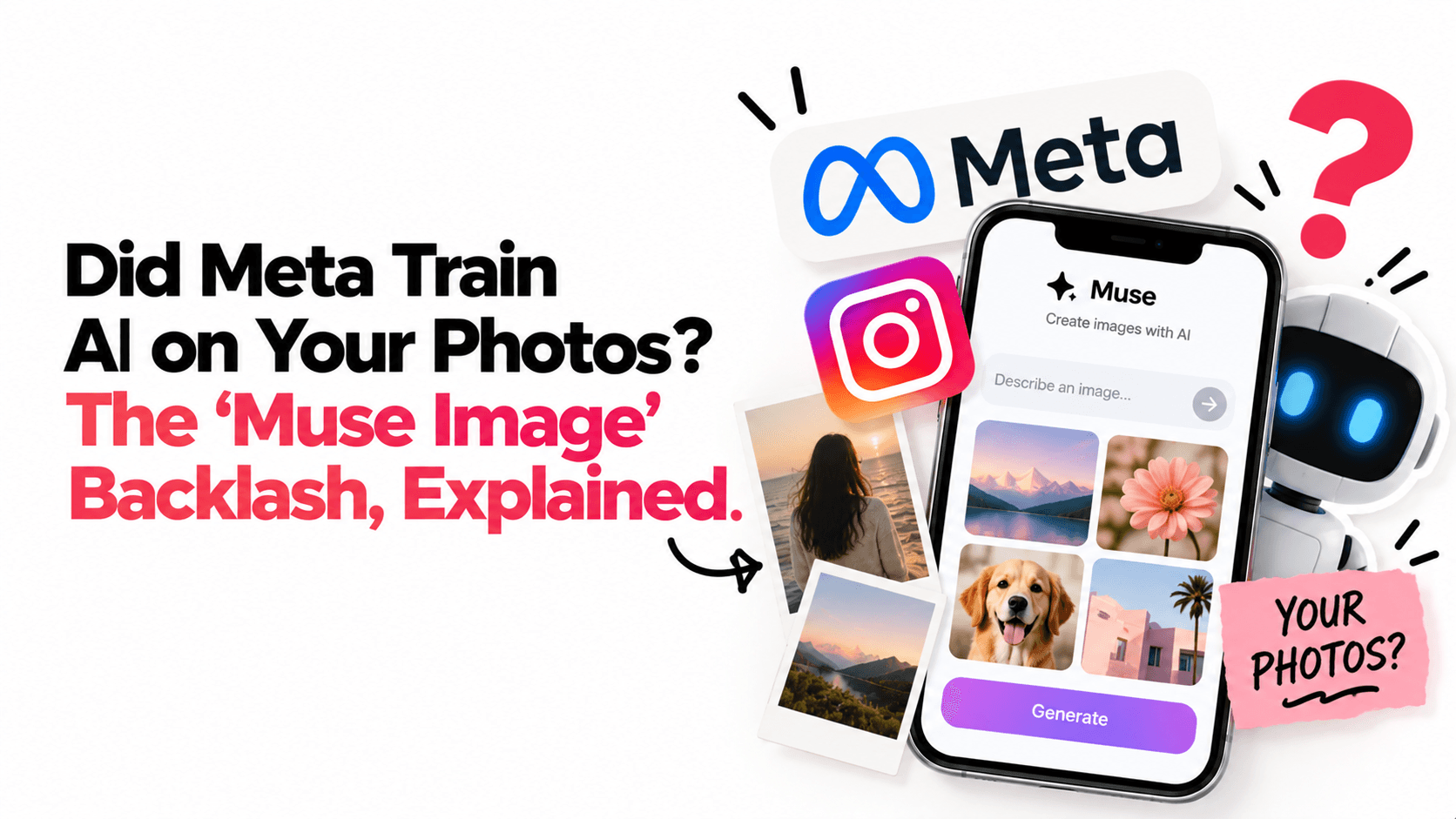
Your old vacation photos, selfies, and public Instagram posts may have become part of a much bigger conversation - AI training and consent.
Meta is facing criticism after users and creators raised concerns over how the company uses public content to train its AI models, including its image-generation tools.
The backlash isn't really about AI itself - it's about a question that's becoming increasingly important in the creator economy:
Should platforms be allowed to use your content to train AI without your explicit permission?
So, What's the Controversy?
Meta has said that it uses publicly available information and licensed data to train its AI systems. This can include public posts, captions, and images shared by adult users on its platforms, depending on the region and applicable privacy laws.
The problem? Many users say they either didn't know this was happening or weren't fully aware of how their content could be used.
For creators, artists, and photographers, that lack of clarity has sparked a major debate around consent, transparency, and ownership.
Why Are Creators Upset?
The backlash boils down to one thing: control.
Creators are asking:
- Was my content used to train AI?
- Did I ever agree to it?
- How can I opt out?
- If my work helps build AI products, should I have more say in the process?
For many artists and creators, their content is their livelihood. The idea that years of creative work could potentially help train AI systems, without clear understanding or compensation has made many uneasy.
What Has Meta Said?
Meta has defended its AI training practices, stating that it uses publicly available information and licensed data and that it complies with privacy laws in the regions where it operates.
The company has also said that it does not use private messages or content from users under the age of 18 to train its generative AI systems.
In response to concerns around transparency, Meta introduced privacy notices and opt-out mechanisms in certain regions, particularly in the European Union, where data protection rules are stricter.
However, many creators argue that the information wasn't communicated clearly enough and that users should have more control over whether their content can be used to train AI in the first place.
Meta maintains that its AI training practices are lawful and that it remains committed to giving users more information about how their data is used.
Why Does This Matter for Creators?
This isn't just another tech controversy.
It's a glimpse into one of the biggest questions facing the creator economy:
Who owns your digital footprint once you post it online?
As AI tools become more powerful, creators are increasingly asking for:
- More transparency about how their content is used.
- Easier ways to control or opt out of AI training.
- Clearer communication from platforms.
- Better protections around creative ownership.
The Bigger Picture
The debate around Meta's AI training practices isn't really about one company or one tool.
It's about the future relationship between AI companies and creators.
Because as AI gets smarter, one question keeps getting louder:
If your content helps train the future of AI, shouldn't you have a say in it?
The debate is no longer just about AI, it's about consent. And as platforms race to build smarter models, creators are asking an equally important question:
Should your content help train AI if you never knowingly agreed to it?
Ready to start your creator journey?
Download Hey! Creators. Brand deals, affiliate earnings, AI tools, and everything you need in one app.